Precision Workpiece Detection in Progressive Dies
At a Glance
- Accurate sheet-feed and workpiece monitoring
- Extremely compact design for tight installation spaces
- Stainless steel sensing face resists impact and abrasion
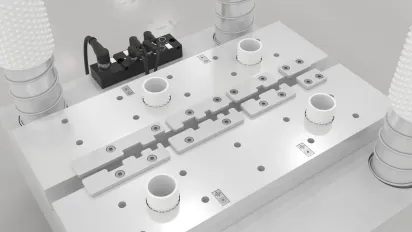
- Suitable for embedded or recessed installation in dies and tooling
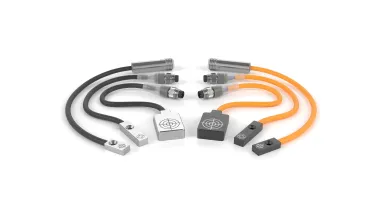
- Available with M12 or M8 pigtail quick disconnects
The F79M Inductive Metal Face Sensor Delivers Industry-Leading Durability and Accuracy
The Application
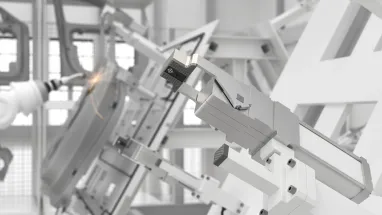
In metal forming operations, stamping presses transform coils of sheet metal and blanks into a wide range of complex parts. Sensors monitor each workpiece as it moves through the die, confirming its presence and position so the press cycle continues only when the workpiece is correctly positioned.
The Goal
Mechanical shock, vibration, lubricants, and mechanical wear can shorten sensor service life. Troubleshooting and sensor replacement interrupt production, reducing shift efficiency and output. The goal is to maximize machine uptime and improve profitability.
The Solution
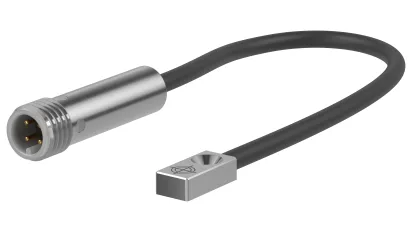
The F79M Pile Driver™ Metal Face Sensor from Pepperl+Fuchs is designed for stamping applications that require sensing ranges of less than 2 mm. Because it operates close to the workpiece, its sensing face is exposed to repeated impacts. Compared with traditional plastic-face sensors, the stainless-steel miniature sensor helps reduce sensor-related downtime. It can also be recessed in dies and tooling to further extend its service life.
Technical Features
- Inductive sensor with a durable stainless-steel sensing face
- Ultra-compact design, the smallest sensor in its class
- Significantly increased resistance to abrasion and impact
- Suitable for embedded and recessed installation in dies and tooling
- Versions with M12 or M8 quick disconnect pigtails
The Advantages
The F79M inductive metal face sensor detects workpieces in demanding stamping and forming applications. Its metal sensing surface withstands mechanical stress better than plastic surfaces, while its compact design allows installation directly in molds and tools. Non-contact sensing supports low-wear workpiece monitoring, helping reduce sensor-related stoppages, and support efficient production.