Reducing Air Consumption in Purge and Pressurization Systems
EPV Low-Leakage Vents: A Solution for Cost-Saving Operations


The Application
As part of a cost-saving and sustainability initiative, a chemical processing company evaluated the operational costs of its machinery, with particular focus on the air compressor and its associated systems. In hazardous areas, purge and pressurization enclosures require a continuous flow of air to maintain positive pressure and prevent the ingress of hazardous gases. The purging sequence consists of an initial high airflow phase to achieve the required number of volume exchanges, followed by a reduced airflow phase to compensate for leakage and maintain safe continuous pressurization. Although purging is performed twice daily for five minutes per enclosure, the main cost driver is the electricity consumed during continuous compressor operation. The area is classified as Class I, Division 2, Group D.
The Goal
The goal was to identify process improvements within the facility to reduce costs. One focus of this evaluation was minimizing the cost associated with running the compressor by reducing compressed air consumption. As noted above, purging and pressurization require a continuous air or protective gas supply, as even the most tightly sealed enclosures will experience air leakage when pressurized. Consequently, air is constantly being consumed during operation, regardless of how well the enclosure is sealed.
The Solution
The protective gas supply evaluation identified areas where enclosures were located in non-Ex areas, eliminating the need for purging, pressurization, and associated gas consumption. Additionally, certain protected enclosures were relocated to non-hazardous areas, further reducing the need for protective gas supply. However, enclosures in the remaining Division 2 areas remained subject to purge and pressurization requirements.
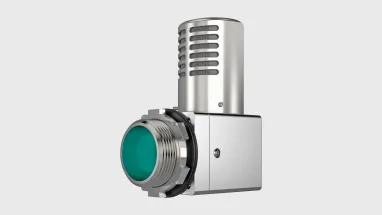
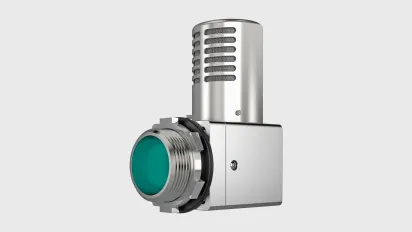
Through a detailed evaluation of the enclosures, several measures were implemented to enhance efficiency and optimize protective gas consumption. Enclosure doors were adjusted, and original gaskets around viewing windows and gland plates were secured or upgraded to ensure optimal sealing. Unsealed conduits were fitted with Division 2-rated cable glands, improving system integrity and minimizing unnecessary airflow. By keeping the purging controller and protective gas supply active during shift changes, an extra purge cycle per enclosure was eliminated, saving both time and resources. Additionally, targeted improvements to supply line and fittings further reduced air consumption, which can account for up to 30% of total usage. Finally, the EPV-7500-AA-03 low-leakage vent was selected for its superior sealing performance and reduced air consumption, delivering measurable gains in overall system efficiency.
Technical Features
- Cost-effective, universal mounting, simple to operate
- Not gravity dependent
- Rugged, corrosion-resistant housing
- Mechanical, no cables required
- Global third-party approvals for Class I, II, Div. 2 and Zone 2/22
Below are the leakage rates for the two types of EPV-7500 vents, measured in cubic feet per minute (cu ft/min) and liters per minute (L/min)
| Comparison | at 0.25” wc (0.63 mbar) | at 0.75” wc (1.9 mbar) | Type |
|---|---|---|---|
| EPV-7500-__-01 | 0.42 (11.8) | 1.08 (30.6) | Single spring |
| EPV-7500-__-03 | <0.03 (1) | <0.03 (1) | Plunger |
The Benefits
The operational cost difference between the two vents is shown below. Assuming an air cost of $0.28 USD per 1,000 cu. ft. and an electricity rate of $0.10 USD per kWh, the cost of air is calculated as the leakage rate from the vent multiplied by the time in use and $0.28 USD per 1,000 cu. ft. of air produced, reflecting the air lost through each vent when below its breaking pressure during operation. These values highlight that choosing a low-leakage vent offers a simple but effective way to cut air consumption and achieve measurable cost savings over time.
Note: Both vents require the same airflow through the enclosure during the purging process. The difference in air consumption occurs after purging, when compensating for leakage.
Based on operation of 8 hrs./day at 260 days/yr.
| Vent type | at 0.25” wc (0.63 mbar) | at 0.75” wc (1.9 mbar) |
|---|---|---|
| EPV-7500-__-01 | $15 USD | $38 USD |
| EPV-7500-__-03 | <$1.1 USD | <$1.1 USD |
Based on operation of 24 hrs./day at 365 days/yr.
| Vent type | at 0.25” wc (0.63 mbar) | at 0.75” wc (1.9 mbar) |
|---|---|---|
| EPV-7500-__-01 | $63 USD | $160 USD |
| EPV-7500-__-03 | $5 USD | $5 USD |