Continuous Wireless Monitoring of Operating States
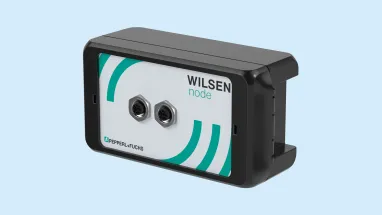
WILSEN.node Autonomous Sensor Node Connects Volt-Free Contacts with IIoT

The Application
Detailed information about the current status of systems and system components is necessary to prevent malfunctions and take targeted measures when necessary. Some examples: Is a pump or ventilation system running normally, not at all, or under overload? Are industrial doors closed? How many hours has an older machine been in operation since its last servicing? Not every machine is connected to a higher-level authority or designed for such a connection. In many cases, connecting the plant component would only be possible at great expense or would require intervention in the machine control system. The latter is often undesirable or forbidden due to cybersecurity concerns. In the case of mobile units, a wired connection is generally not possible at all.
The Goal
At the higher level, a central visualization and monitoring system for the entire plant is to be created which displays the current status of the apparatus and plant components. Actual machine runtimes should be centrally visible in order to enable specific maintenance measures. In the event of malfunctions and problems with individual components, the responsible personnel should be informed and corrective measures should be initiated quickly. This routine should also run automatically if no event-driven messages are implemented in the plant’s control system or if it is not connected to the higher-level control level. It should be possible to adapt maintenance plans to actual machine runtimes as required. Moreover, the solution should offer connection options for different voltage levels.
The Solution
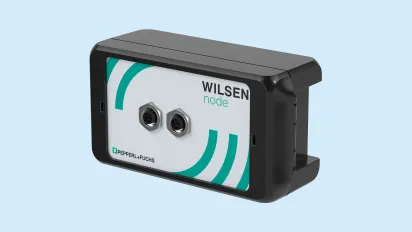
Relays suitable for the respective voltage level are installed in the circuits of the plant components to be monitored. These relays are activated when current flows in the load circuit and actuate the contact on the volt-free side. The volt-free side is connected to the WILSEN.node autonomous wireless sensor node using an adapter cable. In the same way, relay signal contacts or other volt-free contacts (such as relays, switching devices, mechanical limit switches/lever switches, coupling relays, reed contacts, etc.) that are already present in the system but have not been used until now can be connected to the WILSEN.node. The device has two independent inputs for monitoring up to two volt-free contacts of any type.
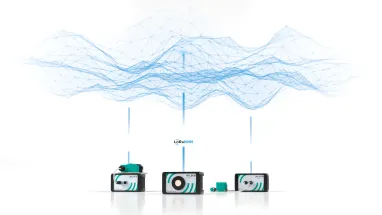
The wireless sensor node detects the operating state of the system component based on the position of the volt-free contact and reports it wirelessly to the target instance via LoRaWAN. NAMUR sensors can also be connected, and mixed operation with volt-free contacts is possible. This solution can be implemented cost-effectively and retroactively.
Technical Features
- Direct connection of any volt-free contacts via adapter cable
- Two independent channels per device
- Secure, energy-efficient data transmission via LoRaWAN
- Detection range through multiple floors in buildings and up to 15 km in open space
- Battery life of up to 10 years
- M12 plug connection for any sensors and volt-free contacts
- M12 cable installation unit available for retrofitting into existing housings
The Benefits

Assets that were not previously monitored are given a reliable connection with minimal effort and without interfering with the machine or system control. The additional information about the status of the system remains at the M+O (monitoring and optimization) sensor technology level. Since there is no direct connection to the control level, no additional cybersecurity measures are required. The high degree of protection of the WILSEN.node (IP66/67) allows for industrial outdoor use. The replaceable battery has a service life of up to 10 years, depending on the frequency of queries and transmissions. The LoRaWAN wireless standard enables easy integration and secure, energy-efficient data transmission with end-to-end encryption.
At a Glance
- Up-to-date information on switching and operating states of machines and plant components at all times
- Easy connection of existing plant components without intervention in the machine control
- Energy-efficient communication via LoRaWAN®
- Secure data transmission with end-to-end encryption
- Robust solution with all hardware included